【Legal Daily】| Nanjing Maritime Court's High-Level Service in Practice for Opening Up
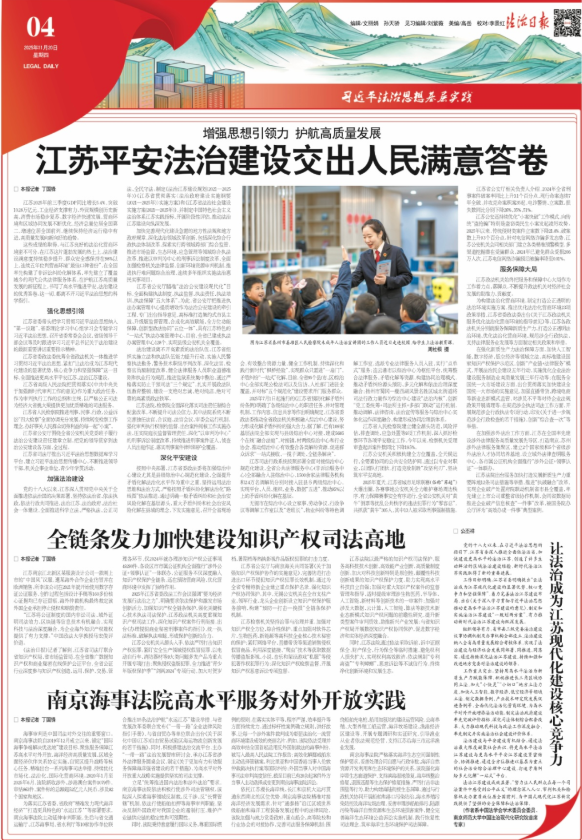
Recently, the Legal Daily published an article highlighting Nanjing Maritime Court's dynamic practices in serving and supporting Jiangsu's core tasks: advancing high-level opening-up, promoting high-quality development of the marine economy, implementing the Regional Comprehensive Economic Partnership Agreement, and executing the Free Trade Zone Upgrade Strategy. The full text is reproduced below.
Nanjing Maritime Court's High-Level Service Practices for Opening-Up
Maritime adjudication serves as a vital window for China's judicial engagement with the world. Since its establishment in December 2019, Nanjing Maritime Court has anchored its efforts toward building an “international preferred destination for maritime dispute resolution.” Focusing on core tasks such as serving Jiangsu's high-level opening-up, promoting high-quality marine economic development, implementing the Regional Comprehensive Economic Partnership Agreement, and advancing the Free Trade Zone upgrade strategy, the court has introduced a series of targeted maritime judicial measures to continuously optimize a market-oriented, law-based, and internationalized business environment. From January 2020 to June 2025, the court received 1,079 new cases involving foreign elements or Hong Kong, Macao, and Taiwan, concluding 863 of them. The total value of these cases exceeded RMB 5.2 billion,
involving 82 countries and regions.
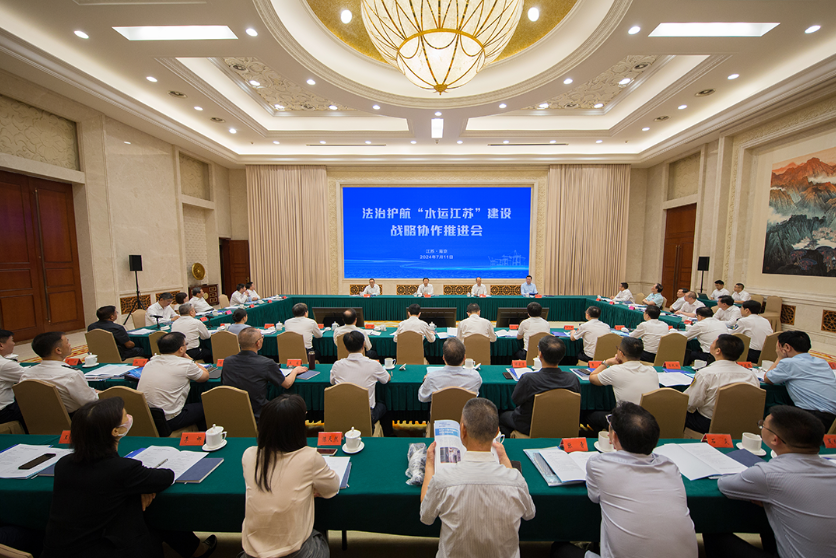
To implement the Jiangsu Provincial Party Committee and Provincial Government's directives on “precision-driven development of the modern marine economy” and “building a more distinctive ‘Water Transport Jiangsu’,” Nanjing Maritime Court proactively extended its judicial functions. It collaborated with 10 partner agencies, including the Provincial Department of Transportation, Jiangsu Maritime Safety Administration, and Provincial Department of Water Resources, to jointly introduce 15 legal measures to safeguard the development of “Water Transport Jiangsu.” The court also co-published the “Belt and Road Enterprise Legal Risk Guidance Manual” with the Provincial Development and Reform Commission and jointly issued the “Several Measures on Deepening the Innovative Development of Maritime Logistics in China (Jiangsu) Pilot Free Trade Zone” with the Provincial Free Trade Zone Office and other entities. Simultaneously, the court actively builds legal exchange platforms by hosting the Belt and Road Legal Development Think Tank Seminar and organizing the Jiangsu Foreign-Related Legal Services Roundtable. It formulated the Several Measures on More Effectively Serving and Safeguarding the Construction of a Marine Power Province, providing robust judicial support for implementing major high-level opening-up strategies.
Guided by the principle of “coordinating domestic and foreign-related legal systems,” Nanjing Maritime Court actively exercised its foreign-related judicial jurisdiction in accordance with the law. The court explored mechanisms to counter sanctions, interference, and “long-arm jurisdiction” in maritime affairs, lawfully performed maritime adjudication functions such as vessel detention, resolutely countered foreign governments' suppression of Chinese enterprises, and safeguarded the stability and predictability of industrial and supply chains.
Simultaneously, the court adheres to the principles of fulfilling international obligations in good faith and respecting international practices. It continuously strives to implement substantive equality, rigorous procedures, and enhanced efficiency. Through landmark cases, it establishes rules and tells compelling stories, ensuring that each adjudication in foreign-related cases becomes a shining example showcasing the effectiveness of building a world-class business environment governed by the rule of law. For instance, the court lawfully accepted and efficiently concluded the nation's first maritime dispute applying the Counter-Foreign Sanctions Law, which was featured in the Supreme People's Court's work report. It also efficiently resolved international disputes such as a case where a Norwegian shipowner voluntarily chose jurisdiction and a case involving the enforcement of a London arbitration award between parties from Liberia and Hong Kong, China. Foreign parties have demonstrated high trust in China's maritime judicial adjudication, with over 20 cases to date where foreign parties voluntarily chose or transferred their litigation to Nanjing Maritime Court.
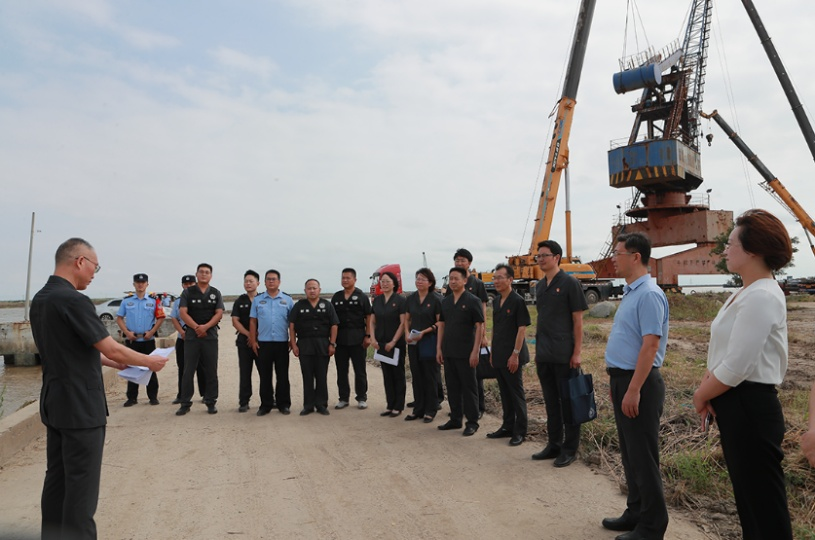
Leveraging Jiangsu's extensive coastline and the strategic connectivity of the Yangtze River and Beijing-Hangzhou Grand Canal, Nanjing Maritime Court precisely aligns with the needs of marine economic development. Addressing legal risks in the development of world-class vessels and marine engineering equipment along the Yangtze River in the Tongtai-Yang area, the court strengthened coordination with local Party committees, governments, key shipbuilding enterprises, universities, and industry associations to refine judicial service mechanisms. It has conducted thematic research and empirical studies on risks associated with the construction and operation of ship charging stations and marine hydrogen refueling stations, as well as on offshore aquaculture, large-scale aquaculture vessel operations, marine ranch development, and fishing port economic zone construction. These efforts guide fishery operators toward lawful and standardized operations while supporting the development of distant-water fisheries in Jiangsu's three coastal cities.
Nanjing Maritime Court strictly enforces mandatory requirements for marine ecological space protection, appropriately balancing voluntary contractual agreements with administrative approvals, and coordinating the development and utilization of marine natural resources with ecological conservation. The court strengthens protection of coastal ecological corridors, supports ecological restoration measures such as coastal wetland rehabilitation, shoreline remediation, and reclamation of enclosed wetlands, and rigorously combats illegal land reclamation activities to help build integrated land-sea ecological barriers. Through collaborative efforts with administrative agencies on ship and port pollution prevention, marine aquaculture pollution control, and marine debris management, the court has properly adjudicated cases involving marine natural resource and ecological damage, such as ship discharge and land-based pollution. It has improved the implementation mechanism for public interest litigation in marine ecological and environmental protection, practiced restorative judicial concepts, and fortified the judicial barrier for marine ecological and environmental protection.