Xinhua Daily丨Controlling Invasive Cordgrass but Harming Clam Farmers: Which Way Should the Judicial Scales Tip?
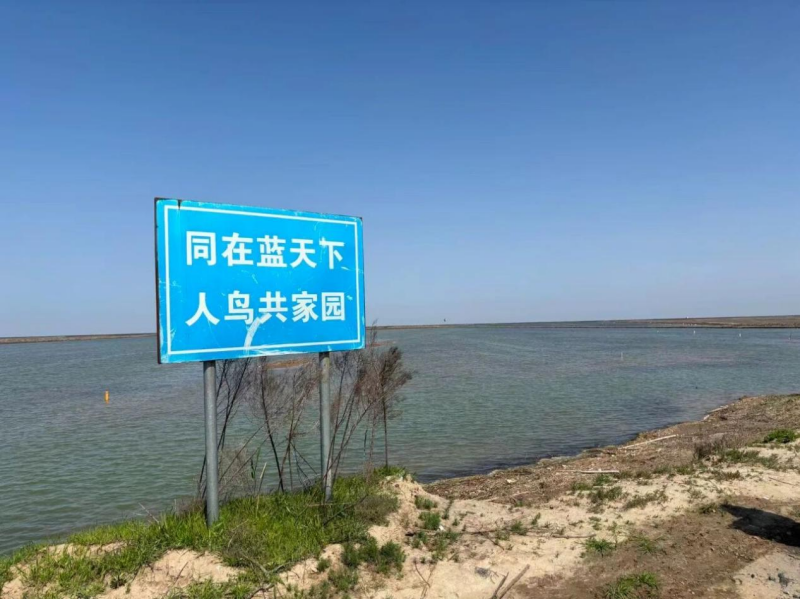
In midwinter, on the tidal flats of the Chuanshui Bay coastline in Dongtai City, mud clams crawl slowly and lay eggs quietly after the tide recedes, while migratory birds occasionally skim the water surface in the distance. This coastal wetland, once ecologically imbalanced due to the rampant spread of Spartina alterniflora, is now revitalizing.
The control of Spartina alterniflora is a matter of national ecological security strategy. However, just over two years ago, due to "improper control methods" employed by a company, mud clam farmers who "live off the sea" suffered significant losses. On one side lies a large-scale ecological restoration project, and on the other, the livelihood of farmers dependent on marine resources. How should the scales of justice balance these interests?

Recently, Nanjing Maritime Court successfully mediated a tort dispute arising from the unauthorized spraying of herbicide during Spartina alterniflora control. Facilitated by the court, the company compensated Old Yang, a tidal flat lessee, 2.05 million yuan, achieving genuine case resolution and dispute closure.
"Killing the Grass" but "Harming the Clams"
Spartina alterniflora, often called the "ecological killer" of coastal wetlands, rapidly displaces native species once established, impedes water exchange in wetlands, causes degradation of marine populations, and creates a seemingly lush but biologically poor "green desert."
Yancheng is one of the cities in China with the largest distribution and highest threat level from Spartina alterniflora. In November 2022, a company won the bid for the ecological protection and restoration project of the Chuanshui Bay coastline in Dongtai City, tasked with dredging and Spartina alterniflora control.
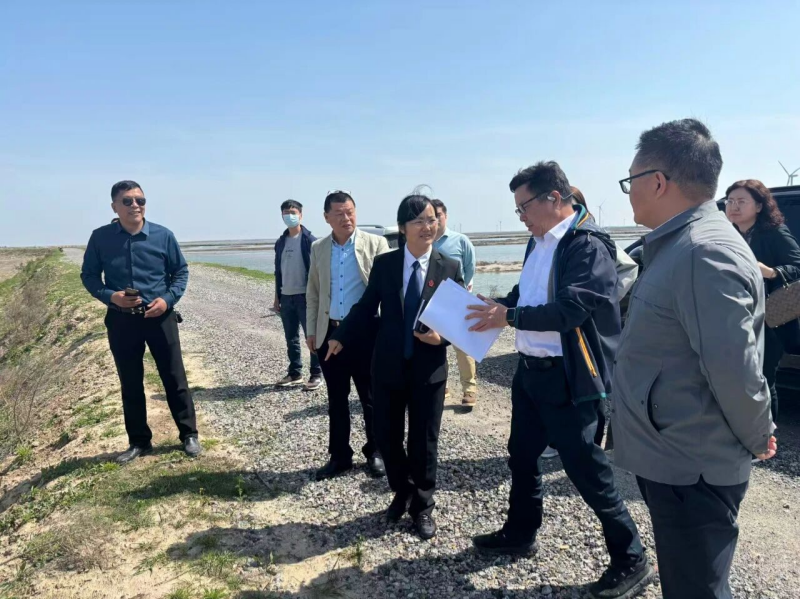
During implementation, however, to avoid submarine cables and cut costs, the company deviated from standard methods like physical cutting, deep plowing, or seawater cofferdam inundation. Instead, it unauthorizedly used drones to spray a diluted chemical herbicide called "haloxyfop-methyl" for "precision strikes" on target areas.
The problem was that while haloxyfop-methyl is effective against Spartina alterniflora, it is toxic to aquatic life, particularly sensitive species like shellfish and fish. The *Action Plan for Spartina alterniflora Control (2022-2025)* jointly issued in 2022 by the National Forestry and Grassland Administration and seven other ministries explicitly prohibits chemical agents posing potential ecological risks, prioritizing ecological and harmless control technologies.
Soon after, Old Yang, a farmer leasing adjacent tidal flats, discovered massive mud clam deaths and a sharp production drop, prompting him to report to the Yancheng Ecological Environment Bureau. An investigation confirmed the company's illegal actions. The environmental authority ordered immediate rectification and imposed a fine exceeding 10,000 yuan.
When Old Yang sought compensation, the company refused. After failed negotiations, in January 2024, Old Yang sued the company at Nanjing Maritime Court, claiming over 10 million yuan in economic losses.
Elusive Evidence, Unclear Losses
The core challenges of the case were evidence preservation and loss quantification.
By the time Old Yang filed the lawsuit, nearly a year had passed since the initial spraying. Repeated tidal scouring and continuous seawater dilution had long since dissipated any chemical residues from the soil and water.
The complaint submitted to the court was a mere two pages, lacking evidence for key facts: the specific amount of production loss and the causal link between the spraying and the loss.

To achieve substantive dispute resolution, Liu Yan, the presiding judge (Deputy Chief Judge of the Maritime Commerce Division, Fourth-Grade Senior Judge) at Nanjing Maritime Court, did not simply dismiss the claim. Instead, she and her assistant conducted multiple on-site inspections, obtained Old Yang's mud clam income data from nearly four years of leasing the flats, and compared production before and after spraying. The data clearly showed a significant decline in 2023, the year of spraying.
Judge Liu further visited other nearby farmers, finding their production stable during the same period. She also verified transaction records from Old Yang's main clients, confirming his accounts were credible.
Furthermore, the court obtained the flight logs of the company's drones, determining the spray coverage and dosage. Data revealed frequent low-altitude operations near Old Yang's farming area boundaries from April to August 2023, covering thousands of mu, coinciding with the mud clams' growth and harvesting season.
This information pieced together a highly plausible, though not perfect, causal chain: while the environmental control action aimed for public good, legality, and legitimacy, the unauthorized use of chemicals overstepped the proper bounds of public-interest action. The fisherman's losses were real and temporally/spatially coincided with the spraying. Thus, it could be presumed that a causal relationship existed between the spraying and the production decline, and the company should bear liability for damages caused by its improper control methods.
Balancing "Public Interest" and "Private Rights"
However, presuming causality was only the first step. Quantifying the loss posed a greater challenge.
As Old Yang had not preserved soil or water samples at the time, and mud clam farming heavily depends on natural conditions (climate, tides, market), forensic assessment could not precisely quantify the loss or causality. Moreover, such assessments are time-consuming and expensive, often costing hundreds of thousands.
"We cannot let fishermen win the lawsuit but lose their livelihood, nor can we let a public-interest project be wholly negated due to misconduct," Judge Liu stated. Instead of merely issuing a judgment, she deeply applied the maritime "Fengqiao Experience," coordinating local government, ecological environment authorities, fishery associations, and other parties to promote mediation, guiding both sides toward mutual understanding and compromise.
After multiple rounds of negotiation, a settlement was reached: the company compensated Old Yang a one-time sum of 2.05 million yuan. Subsequent project phases fully switched to eco-friendly technologies like the "seawater cofferdam inundation method." Now, the first phase of the involved coastal ecological protection and restoration project has passed completion acceptance, and mud clam production on Old Yang's leased flats has returned to normal.
The proper resolution of this case provides judicial guidance for similar disputes and holds significant importance for promoting scientific, green control of Spartina alterniflora and protecting the marine ecological environment.
"Controlling invasive species cannot come at the cost of sacrificing another part of the ecosystem," Judge Liu emphasized. During Spartina alterniflora control, non-standard methods may cause secondary harm to the marine environment. It is essential to follow the succession laws of coastal wetland ecosystems, adhere to systematic and green governance concepts, and employ integrated ecological and engineering measures for scientific control. In this case, although the company acted for the public good, its failure to obtain approval and unauthorized use of a prohibited agent crossed the legal red line. The court's facilitation of its accountability helps promote the scientific and orderly implementation of Spartina alternifloracontrol, achieving a win-win for marine ecological restoration and fishery production.
Currently, China's Spartina alterniflora control has entered its "second half." The reflections prompted by this case continue: ecological governance is never a binary choice. Only by respecting natural laws, revering legal boundaries, and upholding fairness and justice can true harmony between humans and the sea, and sustainable vitality, be achieved.