Seminar on Integrated Maritime Litigation Services in the Yangtze River Delta Successfully Held in Nanjing
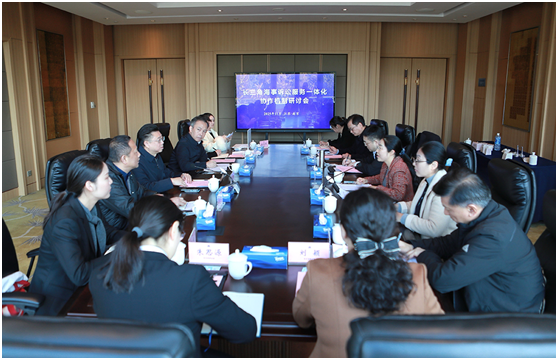
To take stock of the progress made in building an integrated mechanism for maritime litigation services in the Yangtze River Delta, a thematic seminar was held in Nanjing on November 21. The event brought together representatives from the Shanghai, Ningbo, Wuhan, and Nanjing Maritime Courts, including their vice presidents, heads of case filing tribunals, and key staff. Participants engaged in in-depth discussions on major challenges currently facing the integrated mechanism and explored pathways to build a fairer, more efficient, and more convenient maritime judicial service system.
Since June 2024, the four maritime courts have established a comprehensive collaborative mechanism covering general authorization, entrusted custody of arrested vessels, foreign law ascertainment, and specialized appraisal and assessment. Through this initiative, the courts have actively explored effective ways to improve the integration of maritime litigation services. They have not only developed practical measures but also identified common issues that prevalent in practice.
At the seminar, the heads of the case filing tribunals from each court provided detailed reports on the operation and results of the mechanism since its establishment. The deputy presidents of the four courts then affirmed the progress made and offered suggestions and forward-looking insights for the next phase.
Shen Yingming, Vice President of Shanghai Maritime Court, stressed the need to further strengthen coordination among the four courts. He called for the establishment of a regular working mechanism and the enhancement of experience sharing and public outreach to raise the recognition and international influence of maritime adjudication.
Li Feng, Vice President of Ningbo Maritime Court, focused his remarks on resource integration. He proposed establishing unified regional standards for the selection and evaluation of appraisal agencies and ship custody providers, enabling mutual recognition of qualifications and interconnectivity of procedures. He also emphasized using digital tools to transcend geographical barriers and improve judicial services for cross-border trade.
Shen Qian, Vice President of Wuhan Maritime Court, highlighted the significance of foreign-related adjudication and the unique strengths of each court. He called for long-term coordination and the unification of standards for foreign law ascertainment in foreign-related cases. Additionally, he advocated for in-depth research on typical legal issues in inland waterway shipping, so as to drive innovation in maritime justice through adjudication practice.
Shen Jing, Full time Member of the Judicial Committee of Nanjing Maritime Court, pointed out that the collaborative mechanism should be further deepened and expanded in response to the needs of maritime litigation services within the Yangtze River Delta. She proposed the regular sharing of best practices, periodic consultations on complex issues, and coordination of cross-regional related cases. These measures aim to enhance litigant experience through standardized and integrated services, ultimately establishing a replicable model.
Additionally, participants engaged in extensive discussions regarding the coordination between maritime litigation and arbitration, as well as complex jurisdictional issues arising in maritime practice.