Nanjing Maritime Court Organizes a Series of Specialized Training Sessions on the Newly Revised Maritime Law
Recently, Nanjing Maritime Court held a centralized training program for all staff, organizing judicial officers to study the newly revised Maritime Law and its judicial interpretations.
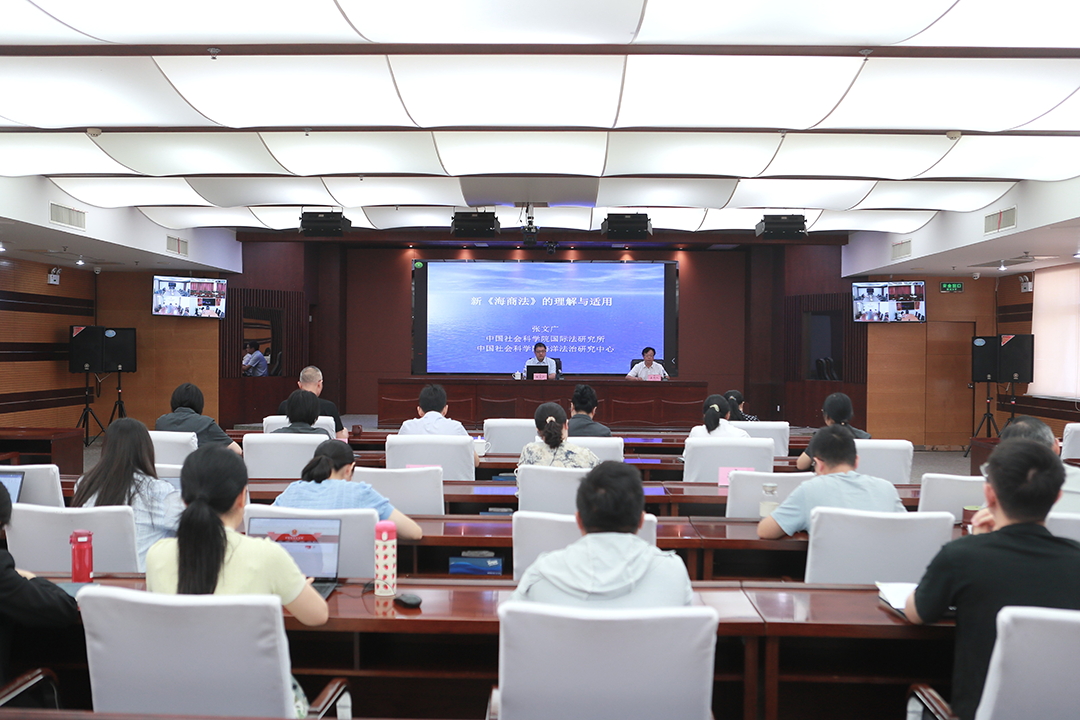
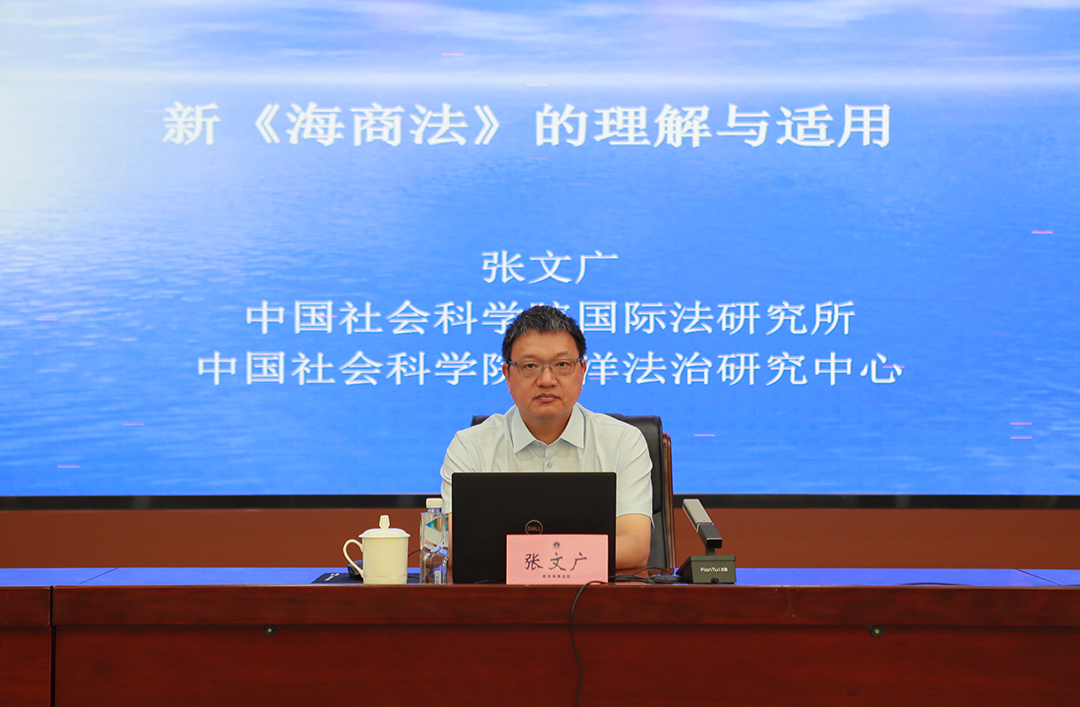
Zhang Wenguang, Director of the Center for Marine Law at the Chinese Academy of Social Sciences and Distinguished Professor at the University of Chinese Academy of Social Sciences, delivered a lecture titled Understanding and Application of the Newly Revised Maritime Law. The lecture analyzed key provisions such as ship property rights, protection of seafarers’ rights, the shipper’s right to modify contracts, limits of maritime liability, and the application of foreign laws, systematically outlining the legislative responses the new law provides to long-standing disputes in maritime practice.
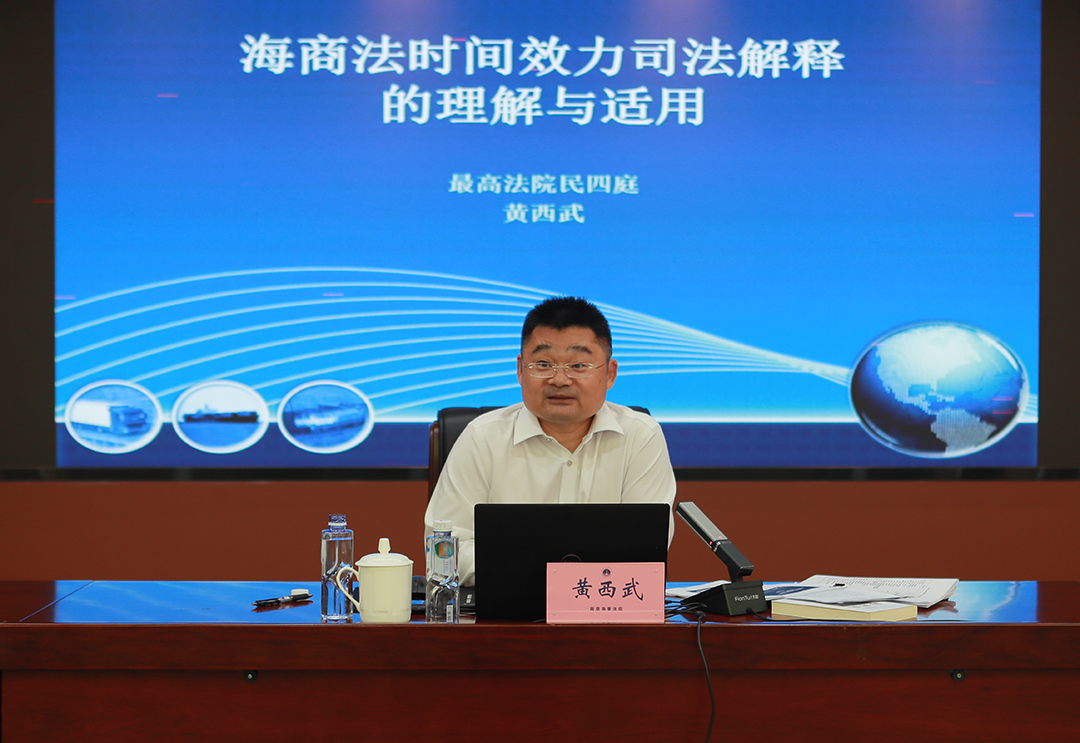
Huang Xiwu, Judge of the Fourth Civil Division of the Supreme People’s Court, gave a special tutorial on Understanding and Application of Judicial Interpretations Regarding the Temporal Effect of the Maritime Law. He comprehensively introduced the drafting background and fundamental principles of the judicial interpretations, offering a detailed, clause-by-clause interpretation of provisions including the non-retroactivity of laws, prudent application of retroactivity to fill legal gaps, phased application for contracts spanning different legal regimes, and favorable retroactivity rules for the transfer of ship mortgage rights. He also responded on the spot to thorny issues encountered by various departments in judicial practice, helping judicial officers accurately grasp the rules governing the transition and application of the old and new laws.
Moving forward, Nanjing Maritime Court will continue to strengthen training and education on the newly revised Maritime Law, help judicial officers accurately grasp its core principles, continuously unify adjudication standards, and improve maritime judicial capacity, striving to serve and safeguard the comprehensive development of the maritime sector through high-quality maritime adjudication.