Nanjing Maritime Court Attends the 2025 Annual Conference of the CPHA Legal and Commercial Affairs Committee
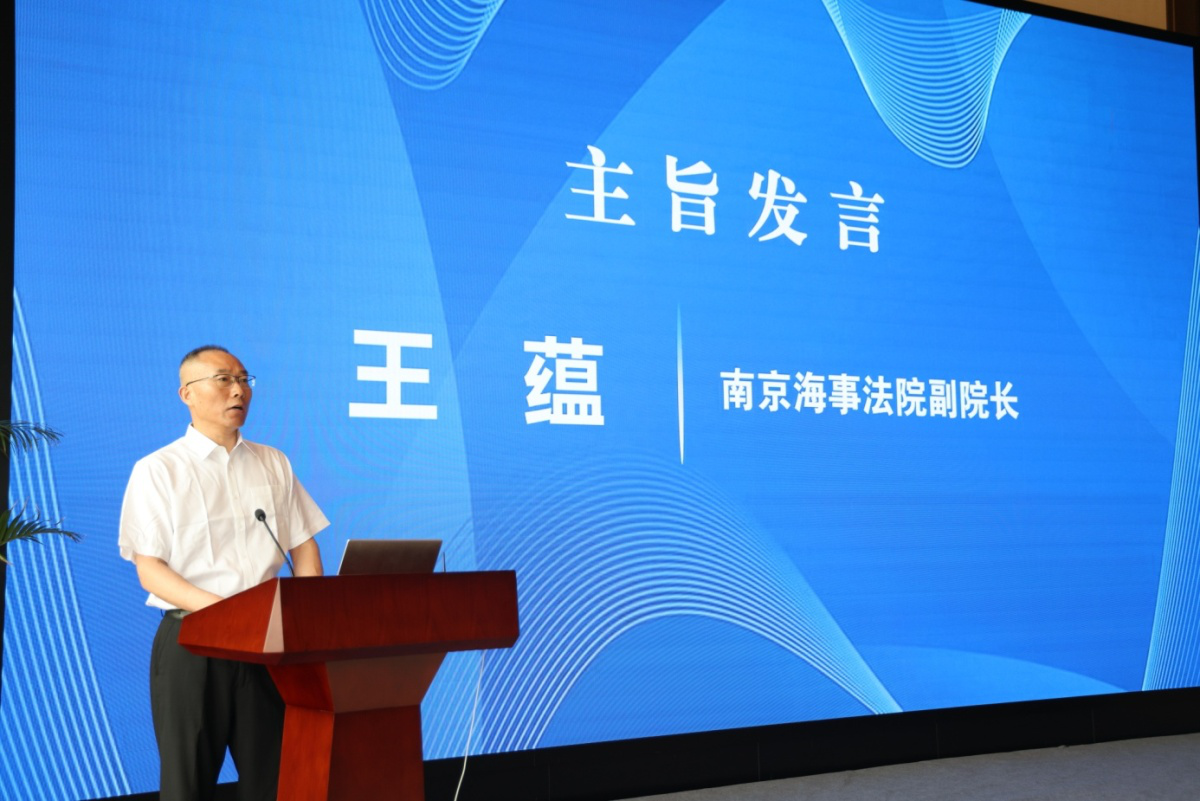
On May 28, 2025, the Annual Conference of the Legal and Commercial Affairs Committee of China Ports and Harbors Association (CPHA) was held in Ningbo, Zhejiang Province. Wang yun, Vice President of the Nanjing Maritime Court, attended the conference and delivered a keynote speech titled "Maritime Justice Empowering High-Quality Development of the Ports Economy"
During his speech, Vice President Wang outlined the efforts made by Nanjing Maritime Court in supporting high-quality development of the port economy. Based on judicial practice, he summarized three major issues recently observed in port-related cases. Firstly, the lack of coordination between special jurisdiction and territorial jurisdiction constrains trial efficiency. Secondly, the involvement of multiple parties in port-related cases increases the difficulty of dispute resolution. Thirdly, admist the current international landscape, disputes concerning port operations are not only increasing in number but also growing in complexity.
To provide high-level maritime judicial services that support port industry, Vice President Wang proposed three initiatives:
Firstly, it is essential to optimize judicial support to consolidate the international competitiveness of ports. This entails strengthening maritime courts' exercise of special jurisdiction over port-related cases, clarifying the division of responsibilities between maritime and district courts, and providing a solid judicial framework for the professional and efficient resolution of port disputes. Additionally, efforts should be made to enhance the development of specialized judge teams for port-related disputes. This requires conducting in-depth and forward-looking assessments of emerging legal issues under new circumstances. Such assessments must appropriately balance all relevant factors, including political requirements, policy orientations, legal and regulatory frameworks, and development trends. These efforts are crucial for improving case-handling capabilities and efficiency, thereby providing robust support for enhancing the international competitiveness of China's port economy.
Secondly, it is crucial to strengthen the guiding role of the rule of law and promote pluralistic dispute resolution to foster a new legal ecosystem for ports. This involves advancing the systematic development of port-related legal frameworks, working towards the alignment of rules for both coastal and inland ports, and establishing a comprehensive legal system for ports. Furthermore, efforts should be focused on constructing a dispute resolution mechanism characterized by "judicial leadership and multi-party collaboration." This will require enhancing coordination between courts, maritime safety administrations, ports and harbors associations, and arbitration institutions, as well as improving the pluralistic dispute resolution mechanism that integrates mediation, arbitration, and litigation.
Thirdly, to build a model of modernized governance, it is necessary to deepen collaborative governance and resource integration. This involves promoting the integration of resources from the judiciary, administrative agencies, and industry associations. Such an approach will facilitate cooperation in areas such as maritime data sharing, joint research on complex issues, and assistance with the service of documents and evidence investigation abroad, thereby helping to overcome challenges related to extraterritorial evidence taking and fact-finding. Relying on one-stop dispute resolution centers, the integration of judicial adjudication and industry practices can be promoted. Furthermore, a collaborative talent development mechanism should be advanced through the model of multi-party collaboration and intellectual support. This initiative aims to provide a governance paradigm and robust talent support for the high-quality development of the port economy.